Overhead Crane Load Sway: What Causes It and How to Reduce It
Load sway is one of those overhead-crane problems that looks simple from the floor and becomes difficult as soon as the job needs speed, accuracy or a tight travel path. A suspended load behaves like a pendulum. Once it starts moving, a quick stop or a sudden direction change can keep the swing going long after the crane has stopped.
For a low-speed, open-floor lift, a small amount of movement may be manageable. In a busy workshop, however, sway can slow the cycle, create clearance problems and make precise placement harder than it needs to be. The answer is not a clever control trick. Good load control begins with the pick, the travel route and the way the crane is specified for the job.
Why does an overhead crane load start to swing?
The usual causes are familiar:
- The hook is not positioned directly over the load before lifting.
- The load is not balanced around its centre of gravity.
- Bridge or trolley travel starts too sharply.
- Travel stops too abruptly.
- The lift has a long hanging distance, which gives the load more room to swing.
- The route has obstructions, narrow clearances or last-minute changes of direction.
The weight of the load matters, but it is not the whole story. A smaller, long-hanging load can be harder to place than a heavier load with a short, stable lift. The shape of the item, the rigging arrangement and the way the operator needs to approach the destination all affect the result.
Start with the lift plan, not the pendant
Before the load leaves the floor, the operator and lifting team need a clear answer to a few practical questions: What is the actual load? Where is its centre of gravity? Which lifting points and slings will keep it stable? Is the hook directly above the load? Is the route clear from pick point to set-down point?
A level, balanced pick makes a major difference. It also removes the temptation to use crane travel to pull a load into position. Side pulling can put unwanted force into the hoist rope, trolley and supporting structure, and it gives the operator less predictable control of the load.
The right sequence is straightforward: make the load secure, lift it only far enough to confirm its balance, check that the route is clear, then begin the move. Site procedures, the crane manual and local safety requirements should always govern the work.
Four operating habits that reduce sway
There is no universal shortcut for every crane and every load, but these habits help create calmer, more repeatable travel:
- Make the pick square. Bring the hook over the load rather than dragging it into line. A clean vertical pick reduces the first swing before travel even begins.
- Use progressive acceleration and deceleration. Smooth starts and planned stops are easier for the operator and gentler on the load path than abrupt full-speed commands.
- Keep the route simple. Each additional direction change adds another opportunity for movement. Where possible, plan the lift so that positioning happens in a controlled sequence rather than through rapid corrections.
- Stop and regain control when swing becomes significant. Trying to chase a large moving load with extra travel inputs usually makes placement less predictable. Establish a safe condition, let the load settle as appropriate for the site procedure, and reassess the route.
These points are not a replacement for operator training. They are the basic conditions that allow a trained operator to use the crane consistently.
When controls and crane specification become part of the answer
If a workshop moves the same load along the same path every day, the problem may be less about individual technique and more about the crane package. This is where a suitable control system can make a real operational difference.
A variable-frequency drive, often called a VFD, can allow smoother acceleration, deceleration and selected travel speeds than a simple fixed-speed arrangement. It cannot correct poor rigging, a side pull or a blocked route. What it can do is make repeatable motion easier to achieve when the job requires careful placement.
Anti-sway functions can also be worth reviewing for repetitive transfer lines, long travel distances, fragile assemblies or jobs with tight landing positions. They should be selected around the actual load, lifting height, speed, operating pattern and control mode. An anti-sway option is not a generic add-on; it needs to suit the working process.
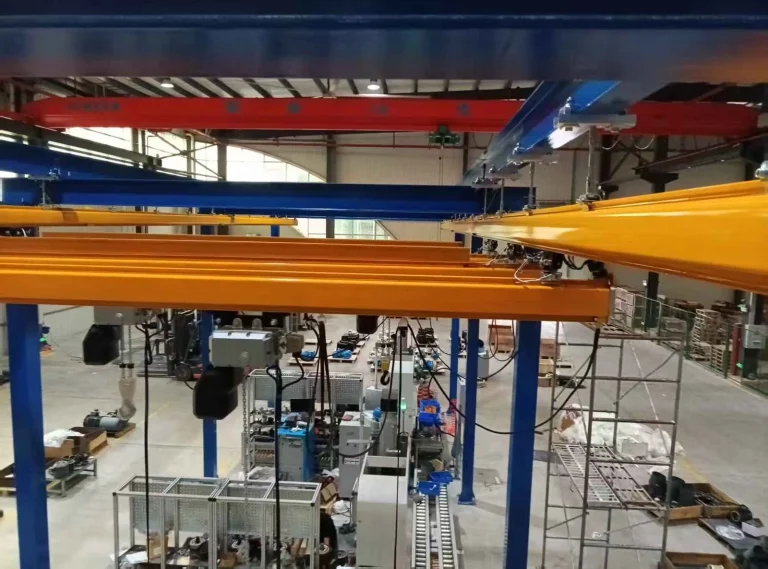
For many standard workshops, a properly specified overhead crane with sensible speed control is enough. For lighter loads in a moderate-duty bay, a single girder overhead crane may provide the right balance of capacity, headroom and control. The selection should begin with the job, not with a feature list.
Information to provide when requesting a crane quotation
When load sway or accurate positioning is part of the problem, include these details in the enquiry:
- Maximum and typical load weight
- Load dimensions and approximate centre of gravity
- Required lifting height and normal hook height during travel
- Span, runway length and available clearance
- Number of lifting cycles per shift
- Travel path, set-down accuracy and any obstructions
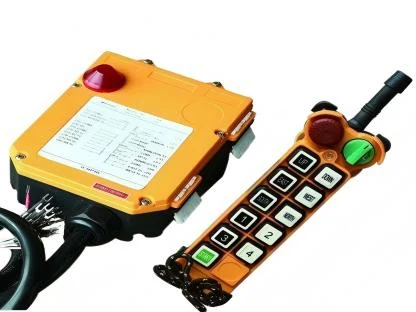
- Preferred control method: pendant, radio remote or cabin
- Whether speed selection, VFD control or anti-sway support is required
This gives the supplier enough information to recommend a control arrangement that matches the work instead of simply quoting a capacity and span.
If the crane suddenly starts to sway more than usual
An unexpected change deserves attention. Review the load and rigging first, then look for changes in operating route, travel speed or control response. If the crane is no longer behaving normally, pause the work and use the site’s inspection and reporting process. Do not assume that a change in behaviour is only an operator issue.
The same principle applies to the hoisting components. A wire rope that is worn, kinked or no longer running correctly needs proper assessment before the hoist returns to service. Our guide to overhead crane wire rope replacement explains the checks that need to happen before a replacement rope is put back into operation.
FAQ: Overhead crane load sway
What is overhead crane load sway?
It is the pendulum-like movement of a suspended load during or after lifting and travel. It is usually related to the initial pick, the rigging, travel speed, lifting height and changes in direction.
Can a VFD eliminate load sway?
A VFD can make acceleration and deceleration smoother, which can reduce sway caused by abrupt travel. It does not correct an unbalanced load, poor rigging or an unsafe travel path.
Should an operator use the crane to pull a swinging load into position?
No. Side pulling and improvised correction movements can create additional load-path forces and make the movement harder to predict. Follow the approved lift plan and site procedure instead.
Is load sway only a problem on large cranes?
No. It can occur on any suspended load. Long lifting heights, narrow clearances, repetitive positioning and light-but-awkward loads can make it a significant issue even in smaller workshops.
Final thought
The best load-control result comes from a stable pick, a clear route, trained operation and a crane control package suited to the work. When a process repeatedly needs accurate placement, describe that requirement at the quotation stage. It is far easier to specify the right controls early than to work around a poorly matched system later.