How to Choose an Overhead Crane for a Manufacturing Workshop
Choosing an overhead crane for a manufacturing workshop is not only a capacity decision. A useful crane system must fit the building, the production rhythm, the load shape, the operator position and the maintenance plan. When these details are reviewed together, buyers can avoid oversized equipment, weak runway assumptions and slow material flow after installation.

Start with the real lifting task
Before comparing crane models, write down what the crane must move every day. The most important questions are the rated load, maximum load shape, lifting height, span, travel length, daily lifting frequency and whether the load is compact, long, hot, fragile or difficult to balance. These details decide whether a single girder overhead crane, double girder crane, hoist trolley or customized lifting attachment is the better fit.
- Rated load and occasional maximum load
- Span between runway beams or building columns
- Hook height and available headroom
- Daily lifting cycles and working class
- Load shape, center of gravity and lifting attachment
- Operator position, visibility and control method
Check building limits before choosing the crane type
Many crane problems begin when the building is treated as an afterthought. Runway beam condition, column spacing, roof height, power supply route and installation access all affect the final proposal. If headroom is limited, a low-headroom hoist or underhung crane may protect valuable hook height. If the workshop cannot support runway loads, a gantry crane or semi-gantry crane may be more practical.
Single girder or double girder?
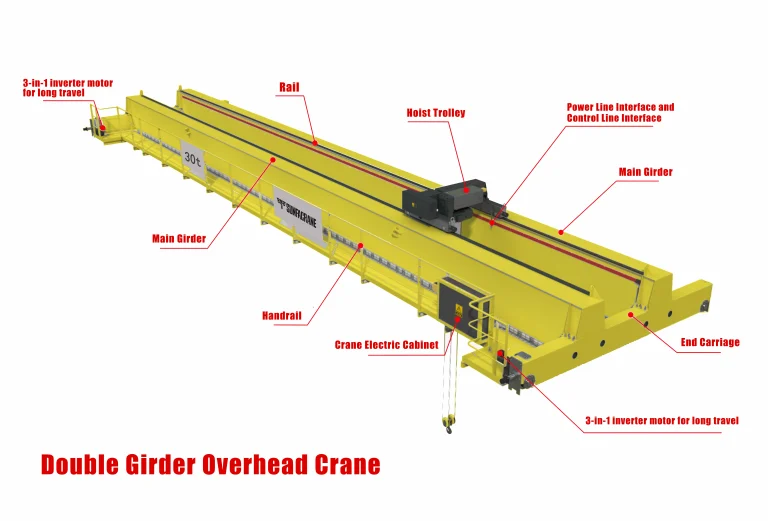
A single girder overhead crane is often suitable for moderate capacity workshops where compact structure, lower building load and economical operation matter. A double girder overhead crane is better when the project needs heavier capacity, longer span, higher hook approach, faster duty or a more demanding trolley configuration. The right choice should balance load, span, duty class and future maintenance access.

Control and safety should match the workflow
Pendant control, wireless remote control and cabin control each make sense in different workshops. A busy production line may require wireless remote control so the operator can keep a safe viewing angle. A heavy-duty process crane may need speed control, limit protection, overload protection or anti-sway support. The control system should help operators move loads safely without slowing normal production.
What to send before asking for a quotation
A faster and more accurate quotation starts with clear site data. Send capacity, span, lifting height, travel length, power supply, workshop drawings and site photos. If the crane will support a production process, also explain the load route and lifting frequency. You can also compare similar scenes in the SUNFACRANE project gallery before contacting an engineer.
SUNFACRANE reviews overhead crane projects from the actual working condition first. Share your workshop information through the contact page and the engineering team can help match the crane structure, hoist system and control plan to your site.