Smart Overhead Crane Automation: When an Intelligent Crane Is Worth It
For many factories, a standard overhead crane is still the right answer. It lifts, travels, and places the load where the operator tells it to go. But in some workshops, the lifting job becomes too repeatable, too close to valuable equipment, or too dependent on one experienced operator. That is usually the point where smart overhead crane automation deserves a serious look.
An intelligent crane is not just a crane with a bigger control cabinet. The value comes from how the crane handles real production problems: load sway, repeated travel routes, blind spots, collision risk, inconsistent positioning, maintenance surprises, and the lack of useful lifting data. When those problems are costing time or creating risk, automation can be a practical investment instead of a fancy add-on.

This guide explains when an intelligent crane system makes sense, which functions matter most, and what information a buyer should prepare before asking for a quote. If you are already comparing system options, you can also visit the SUNFACRANE Intelligent Crane page for a broader product overview.
What smart overhead crane automation means in practical terms
In a practical factory setting, an intelligent crane combines the mechanical lifting system with sensors, control logic, drive technology, and monitoring tools. The goal is not to remove every human decision. The goal is to make the lifting process calmer, more repeatable, easier to supervise, and safer around people and equipment.
A typical smart crane package may include variable frequency drives, anti-sway control, laser or encoder positioning, load monitoring, protected travel zones, collision avoidance, remote diagnostics, and a human-machine interface for operators or supervisors. Some systems are semi-automatic, where the operator confirms each movement. Others can run predefined routes between workstations after the load is secured and the area is cleared.
The level of automation should match the job. A maintenance bay may only need smoother travel and overload records. A busy production line may need route control, positioning limits, and data reporting. A storage yard or raw material handling area may need stronger anti-collision logic. The best design starts with the lifting process, not with a software feature list.
When an intelligent crane is worth considering
Automation is easiest to justify when the crane is part of a repeatable production flow. If operators move the same type of load between the same points all day, small improvements in travel time, positioning accuracy, and load stability can add up. This is especially true when the crane is upstream of a production line and any delay can affect several workstations.
It is also worth considering when load swing creates problems. A large part, mold, coil, plate, or assembled component may not be extremely heavy, but it can still be difficult to control once it starts to sway. Anti-sway control helps reduce sudden movement during acceleration and braking, which makes the operator’s job easier and helps protect nearby machines, racks, walls, and finished products.
Another common reason is safety. Some facilities have areas where people, forklifts, machines, and cranes work close together. In those cases, electronic travel limits, warning zones, collision avoidance, and overload data can support safer daily operation. These functions do not replace proper training or site safety rules, but they reduce the number of situations where everything depends on perfect manual judgment.
Smart monitoring becomes useful when managers need better visibility. Many factories know a crane is important, but they do not know how often it runs, which motions are used most, whether the load is close to the rated capacity, or when faults begin to repeat. Remote crane monitoring can turn the crane from a hidden utility into a visible part of production planning and maintenance.
Core functions buyers should understand before quoting
Not every intelligent crane needs every function. A good quotation should separate must-have functions from nice-to-have functions. That keeps the project realistic and avoids paying for automation that operators will not actually use.
| Function | Why it matters | Practical note |
|---|---|---|
| Anti-sway control | Reduces load swing during travel and braking. | Useful for long travel distances, delicate loads, molds, coils, and precision placement. |
| Positioning control | Helps the crane stop accurately at defined points. | Best for repeated routes between machines, storage areas, or assembly stations. |
| Collision avoidance | Helps prevent unsafe approach between cranes, hooks, structures, or restricted areas. | Important for shared runways, multi-crane workshops, and busy production zones. |
| Protected zones | Limits crane movement near machines, doors, walkways, or sensitive equipment. | Requires a clear workshop layout and well-defined operating rules. |
| Load monitoring | Records load weight and helps prevent overload events. | Useful for safety review, operator training, and maintenance planning. |
| Remote monitoring | Shows operation data, alarms, and service information. | Valuable when the crane is critical to production uptime. |
| Automatic route control | Runs selected travel paths with controlled speed and stops. | Works best when pick-up and drop-off points are stable and repeatable. |

Where smart overhead cranes fit best
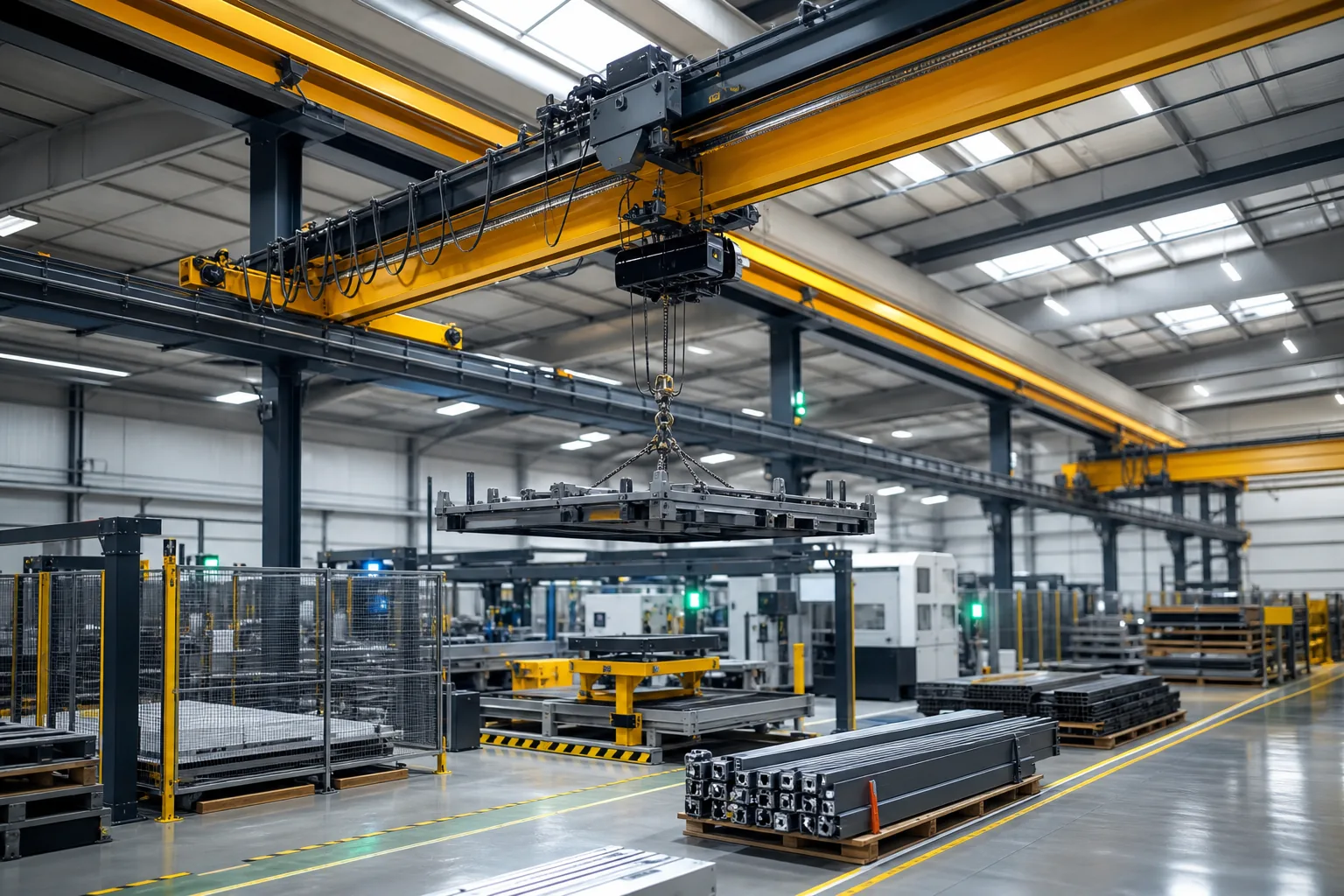
Intelligent cranes are often used in workshops where material flow is predictable but the operating environment is demanding. Examples include machining and assembly plants, steel processing lines, mold handling areas, power equipment manufacturing, precast component handling, automotive workshops, and heavy machinery production.
In a machining workshop, the crane may move large parts between machine tools, inspection stations, and assembly areas. Stable positioning matters because the load is close to expensive equipment. In a steel processing facility, anti-sway and route control can improve the handling of plates, coils, or fabricated structures. In a warehouse or material staging bay, smart positioning and crane data can help managers understand how the lifting system affects order flow.
The same idea applies to many industrial projects, but the solution should be adjusted to the site. You can review more examples on the industry applications page, then match the crane design to the actual load, workflow, and building conditions.
What to prepare before asking for an intelligent crane quote
A useful quote starts with useful information. If the supplier only receives a lifting capacity and span, the automation part will be mostly guesswork. Before requesting a smart crane proposal, prepare the basic crane data and the process data together.
- Rated load and normal load range: Include the heaviest load, but also describe the loads handled every day.
- Span, lifting height, runway length, and building limits: These decide the mechanical platform and available space for sensors or control equipment.
- Duty cycle: Share how many lifts per hour, shifts per day, and operating days per year you expect.
- Travel route: Mark the common pick-up and drop-off points on a simple workshop layout.
- Positioning accuracy: Explain whether the crane only needs to stop near a zone or line up with a fixture, machine, or rack.
- Safety zones: Identify walkways, machine areas, doors, pits, obstacles, and other cranes.
- Control preference: Tell the supplier whether you prefer pendant control, radio remote control, cabin control, HMI stations, or a mixed mode.
- Integration needs: Mention whether the crane must connect with production systems, warehouse software, doors, conveyors, or other equipment.
- Environment: Include dust, heat, humidity, outdoor exposure, corrosive gas, magnetic interference, or explosion-risk areas if relevant.
For the mechanical side, most intelligent systems still start with a proven overhead crane platform. The difference is the control package and how carefully the crane is matched to the process. For special loads or unusual layouts, a customized crane solution may be more suitable than a standard catalogue model.
Common mistakes that make crane automation disappointing
The first mistake is automating a poorly defined process. If the route changes every week, the load shape is never consistent, or the workshop layout is still uncertain, a highly automated crane may become frustrating. In that case, it is often better to start with a reliable crane, smooth speed control, safety limits, and a design that can be upgraded later.
The second mistake is focusing only on software. A smart crane still needs a strong bridge, trolley, hoist, runway, electrical system, and braking design. If the mechanical platform is undersized or the runway is not aligned properly, automation cannot hide the problem. The crane should be stable first, then smart.
The third mistake is ignoring the operator. Even when a crane can run semi-automatic routes, operators still need clear controls, logical warning messages, manual override procedures, and training. A good interface should help people work better, not make them feel that the crane is fighting them.
The fourth mistake is collecting too much data without a plan. It is easy to ask for a dashboard with everything. It is harder to decide which data helps maintenance, safety, and production. Start with useful records: running hours, load history, overload warnings, fault codes, brake and drive alarms, and planned service reminders.
Does automation always increase the project cost?
Yes, a smart overhead crane usually costs more than a basic manual crane. The better question is whether the added cost solves a real production problem. If automation only looks impressive on paper, it may not pay back. If it reduces product damage, improves positioning, lowers downtime risk, shortens repeated handling cycles, or gives maintenance teams better warning, the business case becomes much stronger.
For many buyers, the best approach is staged. Start with the mechanical crane, frequency control, overload protection, safe electrical design, and room for future automation. Then decide which smart functions are necessary from day one. This keeps the project practical while avoiding a dead-end design.
A simple selection path for buyers
When you compare intelligent crane options, use a step-by-step selection path instead of starting with a long feature list.
- Define the lifting task. Confirm the load, size, center of gravity, lifting points, frequency, and operating environment.
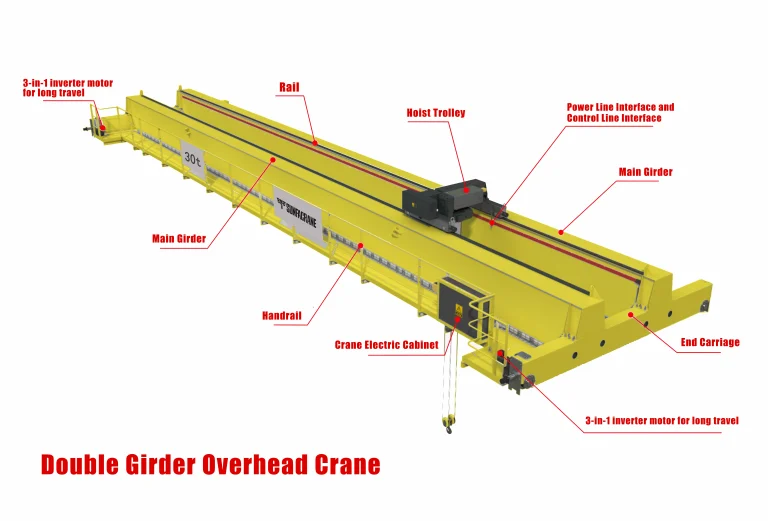
- Choose the crane type. Decide whether the project needs a single girder overhead crane, double girder overhead crane, gantry crane, light crane, or a custom process crane.
- Map the route. Mark where the load starts, where it stops, and where the crane should slow down or avoid travel.
- Select the automation level. Choose manual with smart protection, semi-automatic operation, or more advanced route control.
- Confirm the safety logic. Define restricted zones, warning behavior, overload limits, emergency stops, and manual override rules.
- Plan maintenance access. Make sure sensors, cabinets, drives, and monitoring devices can be serviced without creating unnecessary downtime.
If your lifting task is lighter, modular, or workstation-based, a light crane system may be a better starting point than a heavy overhead crane. If the project involves heavier loads, long spans, or process integration, the intelligent overhead crane route may be more appropriate.
FAQ about intelligent crane systems
Is an intelligent crane the same as a fully unmanned crane?
No. A fully unmanned crane is only one possible form of automation. Many intelligent cranes are semi-automatic. The operator still controls or confirms the movement, while the crane helps with anti-sway, limits, positioning, alarms, and data recording.
Can an existing overhead crane be upgraded?
Sometimes. It depends on the crane structure, electrical system, drive type, runway condition, duty cycle, and available space for sensors and control equipment. A site inspection is usually needed before recommending an upgrade.
Which function should come first?
For many factories, anti-sway control, overload protection, and controlled travel speed are the first practical upgrades. Positioning control, protected zones, and remote monitoring can be added when the workflow is clear enough to benefit from them.
Does smart monitoring replace regular maintenance?
No. Monitoring helps maintenance teams see patterns and warnings, but it does not replace inspection, lubrication, brake checks, wire rope checks, electrical testing, and operator feedback.
What information should I send for a quote?
Send the rated load, span, lifting height, runway length, workshop layout, lifting frequency, route points, accuracy requirements, environment, and photos or videos of the work area if available. The more clearly the process is described, the more useful the proposal will be.
Final thoughts
Smart overhead crane automation works best when it is designed around the real lifting process. The goal is not to make the crane look high-tech. The goal is to move loads more steadily, protect people and equipment, reduce avoidable downtime, and give managers better information about a critical part of production.
If your workshop has repeated crane routes, difficult load sway, tight operating areas, or a need for better crane data, an intelligent crane may be worth evaluating. Start with the load and workflow, then choose the crane structure and automation level that fit the site. SUNFACRANE can help compare standard overhead crane options, customized crane designs, and intelligent crane control packages for industrial projects.