Gantry Crane vs Overhead Crane
Choosing between a gantry crane and an overhead crane is usually a site decision before it becomes a product decision. Both systems can lift heavy loads safely, but they use different structures, foundations and operating spaces. A good choice should match the building, the production route, the load weight and the way operators need to move materials every day.

The simplest difference
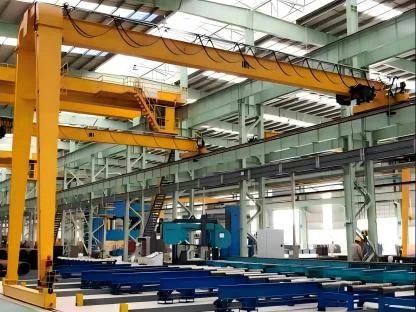
An overhead crane usually runs on runway beams fixed to a workshop structure or independent columns. It is a strong choice for factories where lifting follows a repeated production path. A gantry crane runs on legs, which means the crane structure can be more independent from the building. This makes it useful for yards, precast areas, warehouses, ports and workshops where runway beams are not available.
When an overhead crane is the better fit
An overhead crane is usually the better option when the facility has enough building strength, clear hook height and a fixed lifting route. It keeps the floor area open, supports smooth travel along the workshop span and can be configured as a single girder overhead crane or a double girder overhead crane depending on capacity, span and duty class.
- Best for production lines with repeated lifting points
- Good for heavy-duty manufacturing and assembly workshops
- Useful when the factory needs clean floor movement for forklifts or carts
- Often preferred for long-term indoor lifting with high daily cycles

When a gantry crane is more practical
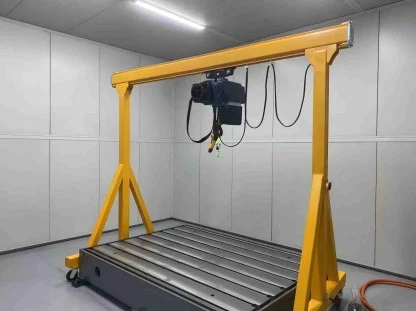
A gantry crane is often more practical when the lifting area is outside, the workshop cannot support runway loads, or the project needs a flexible lifting bay. Gantry cranes can be full gantry, semi gantry or portable designs. For large outdoor sites, rail-mounted gantry cranes provide long travel distance and stable coverage. For lighter handling, mobile gantry cranes can help maintenance teams move parts without changing the building.
Compare runway, foundation and site movement
- Building support: overhead cranes need reliable runway support; gantry cranes carry loads through their legs.
- Foundation work: gantry cranes may need rails and ground preparation; overhead cranes may need runway beams and columns.
- Hook coverage: overhead cranes cover the workshop span; gantry cranes can be planned for yards or special process areas.
- Future changes: gantry cranes can be easier to relocate in some projects, while overhead cranes are often a permanent factory asset.
- Weather exposure: outdoor gantry cranes require wind protection, corrosion protection and suitable electrical protection.
Safety and maintenance factors
Both systems should include travel limit switches, overload protection, emergency stop, clear warning devices and a maintenance-friendly electrical layout. The safer option is the one that gives operators better visibility, a cleaner load path and enough space for inspection. For high-frequency production, duty class and component quality matter as much as rated capacity.
How to choose the right system
Before buying, prepare the load weight, span, lifting height, working environment, power supply, travel distance and photos or drawings of the site. You can also review the SUNFACRANE project gallery to compare real crane applications. If the site conditions are complex, send the layout to the engineering team through the contact page so the crane type, structure and safety configuration can be matched to the actual job.