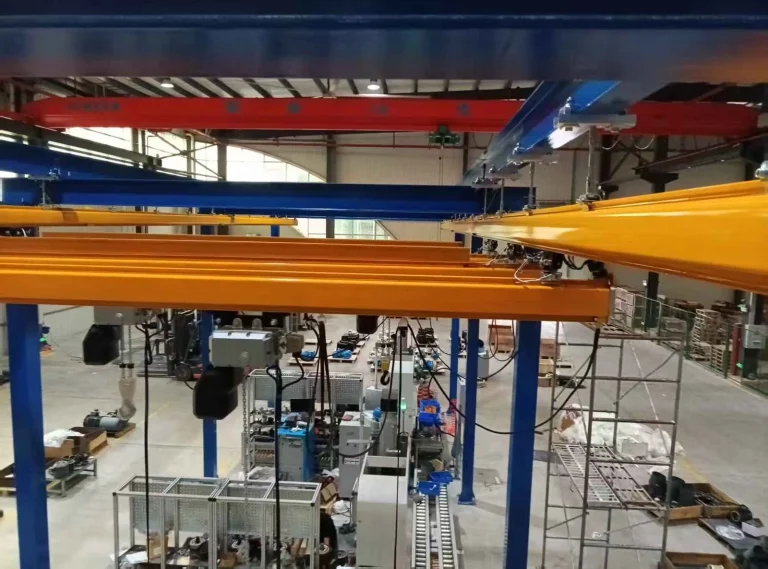
Application of Automotive Die-Casting Cranes in New Energy Vehicle Production
1. Industry Background and Demand for Specialized Cranes

The rapid growth of the new energy vehicle (NEV) sector has created a need for advanced manufacturing technologies, particularly in die-casting processes. NEV production relies heavily on lightweight materials like aluminum alloys, which require precision handling during high-pressure die-casting (HPDC) operations. Specialized automotive die-casting cranes, such as those manufactured by SUNFACRANE, play a crucial role in ensuring smooth, safe, and efficient material transport within these manufacturing environments.
In die-casting, components such as battery cases, engine mounts, and structural parts need careful handling due to their intricate designs and high precision requirements. SUNFACRANE’s automotive die-casting cranes are engineered to handle these tasks, facilitating faster production cycles and reducing material wastage.
2. Key Functions of Die-Casting Cranes in NEV Manufacturing

SUNFACRANE’s automotive die-casting cranes offer several critical functions in NEV production facilities:
- Mold Handling and Replacement:
Large molds used in die-casting are heavy and delicate. Specialized cranes ensure precise positioning during mold changes, minimizing downtime and ensuring safety. - Transport of Cast Components:
After die-casting, components often need to be transferred for cooling or further processing. Cranes with high precision and load stability are essential for avoiding damage to the freshly cast parts. - Material Loading:
Raw materials like aluminum ingots or recycled metals need to be loaded into melting furnaces. SUNFACRANE’s specialized cranes streamline this process, reducing manual intervention and increasing safety.
3. Advantages of SUNFACRANE’s Specialized Die-Casting Cranes
Enhanced Efficiency:
SUNFACRANE designs its automotive die-casting cranes to operate in high-cycle production environments. They enable rapid mold changes and material transfers, optimizing the entire manufacturing process. Automated features, such as programmable lifting sequences, further enhance productivity.
Improved Precision:
Precision is paramount in NEV manufacturing, especially for complex parts like battery housings and motor components. SUNFACRANE’s cranes offer advanced control systems that ensure accurate lifting and placement, reducing the risk of errors.
Safety and Reliability:
Safety is a top priority in heavy industries. SUNFACRANE’s cranes come with advanced safety features, such as overload protection, anti-sway systems, and automated emergency stop functions. These features protect both the equipment and personnel, ensuring compliance with international safety standards.
4. Selecting the Right Die-Casting Crane for NEV Plants
When choosing a die-casting crane, NEV manufacturers should consider several factors:
- Load Capacity:
The crane’s load capacity must align with the weight of the molds and components used in the facility. Overloading can lead to accidents and equipment damage. - Precision Requirements:
High-precision cranes are essential for handling delicate parts. Features such as micro-speed controls and anti-sway technology enhance operational accuracy. - Operational Environment:
Die-casting facilities often involve high temperatures and heavy dust. SUNFACRANE cranes are built with robust materials and protective coatings to withstand these conditions. - Automation and Integration:
Modern die-casting cranes can be integrated with automated systems, reducing manual labor and improving process consistency.
5. Case Study: Implementing SUNFACRANE Die-Casting Cranes in an NEV Facility
Consider a leading NEV manufacturer that implemented SUNFACRANE’s specialized die-casting cranes to improve their production line efficiency. By upgrading to automated cranes with precise load handling and advanced safety features, the company reduced mold change time by 30% and increased overall productivity by 20%. This also led to fewer defects in die-cast components, enhancing product quality and reducing waste.
6. Future Trends in Die-Casting Cranes for NEV Production
The future of die-casting cranes in NEV manufacturing lies in further automation and smart technologies. Emerging trends include:
- IoT Integration:
Smart cranes equipped with sensors can monitor operational parameters in real-time, predicting maintenance needs and minimizing downtime. - Eco-Friendly Solutions:
With the focus on sustainability, manufacturers are exploring energy-efficient crane systems that reduce the environmental impact of NEV production. - Enhanced Human-Machine Interfaces (HMI):
User-friendly interfaces make crane operation more intuitive, reducing the need for extensive training and minimizing human error.
Conclusion
SUNFACRANE’s automotive die-casting cranes are indispensable in the NEV industry, offering efficiency, precision, and safety in handling critical components. As NEV production continues to grow, investing in specialized die-casting cranes from SUNFACRANE will be key to maintaining a competitive advantage and meeting the stringent quality demands of modern automotive manufacturing.