How to Choose the Right Overhead Crane Capacity for a Workshop
When people ask for an overhead crane quote, capacity is often the first number they mention. It is also the number most likely to be rounded up too quickly. A 10 ton crane may be enough for one workshop and completely wrong for another, even if both lift parts in the same weight range. The useful question is not only “how heavy is the load?” It is “how will this crane be used on an ordinary working day?”

If you are planning a new overhead crane system, the capacity decision should start with the actual part weight, lifting tools, handling frequency, span, hook height and the way material moves through the building. This is where a practical crane layout saves money. It avoids buying a crane that looks strong on paper but works awkwardly on the floor.
Start With the Heaviest Real Load
The rated load should include the workpiece, lifting beam, spreader, hooks, grabs, magnets or any fixture that hangs below the hoist. In many workshops, the fixture weight is treated as a detail until the final drawing stage. That is a mistake. A steel lifting beam, coil tong or special clamp can take a meaningful share of the crane capacity before the product is even lifted.
A simple working rule is to list the heaviest load you lift today, the heaviest load already planned for the next two or three years, and the weight of the below-hook device. The crane capacity should be chosen from that complete number, not from the workpiece alone.
Do Not Ignore Duty Cycle
Two cranes with the same capacity can live very different lives. One may lift a mold twice a day. Another may feed a production line every few minutes. The second crane needs more attention to working class, motor selection, brake life, wheel load and electrical control. Capacity alone cannot describe that workload.
- Occasional maintenance lifting: capacity and hook coverage are usually the main checks.
- Daily production handling: duty class, travel speed and operator control become more important.
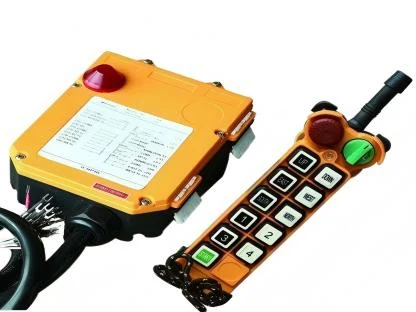
- High-frequency handling: consider inverter control, better braking, anti-sway options and easier maintenance access.
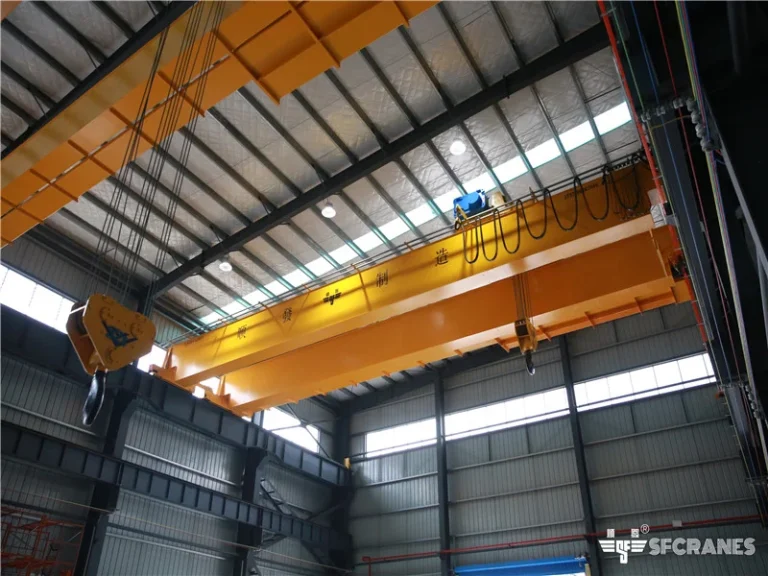
For light and medium workshop handling, a single girder overhead crane can be a clean and cost-effective choice. For heavier loads, wider spans or tougher duty, a double girder overhead crane usually gives better rigidity, hook height and long-term stability.
Check Span, Hook Height and Building Clearance Together
Capacity is tied to the building. A wider span increases the load on the bridge, end trucks, runway beam and columns. A higher lift may change hoist selection and wire rope arrangement. A low roof may push the design toward a low-headroom hoist, a different girder layout or a smaller hook approach.
This is why a crane supplier should ask for workshop width, runway length, clear height, column spacing and the working area before confirming the model. In a manufacturing workshop, these measurements decide whether the crane helps production or becomes another restriction inside the building.
Leave a Sensible Margin, Not an Expensive One
A safety margin is necessary. Oversizing everything is not the same as engineering. A crane that is much larger than the real job can increase the cost of the bridge, runway, civil structure, power system and maintenance parts. It may also reduce headroom or make controls less smooth for smaller daily loads.
The best crane capacity is usually the smallest capacity that safely covers the real load, the handling fixture, normal production growth and the correct working duty.
For very heavy loads or open winch trolley applications, a double girder overhead crane with winch may be the right direction. But that choice should come after the load case and workshop structure are clear.
A Practical Capacity Checklist
- Maximum workpiece weight, including future products already under discussion.
- Weight of spreader beam, lifting clamp, magnet, grab or other below-hook tool.
- Daily lift count and whether the crane works in maintenance, production or continuous handling.
- Required span, lift height, runway length and hook approach.
- Available power supply, control preference and operating environment.
- Space for inspection, maintenance and safe load testing.
If these points are unclear, send the layout, load list and a few site photos before asking for final pricing. You can also compare similar installations in the project gallery to see how crane capacity, span and workshop layout are matched in real sites.
Final Thought
A workshop crane is a long-term tool, not a one-time purchase line. Choosing the right overhead crane capacity means balancing safety, real production needs and building limits. If you are not sure whether your project should use a single girder, double girder or winch trolley design, share the load details with SUNFACRANE and ask for a layout-based recommendation before locking the model.