Overhead Hoist Upper Limit Switch: What It Protects and Why It Should Never Be Bypassed
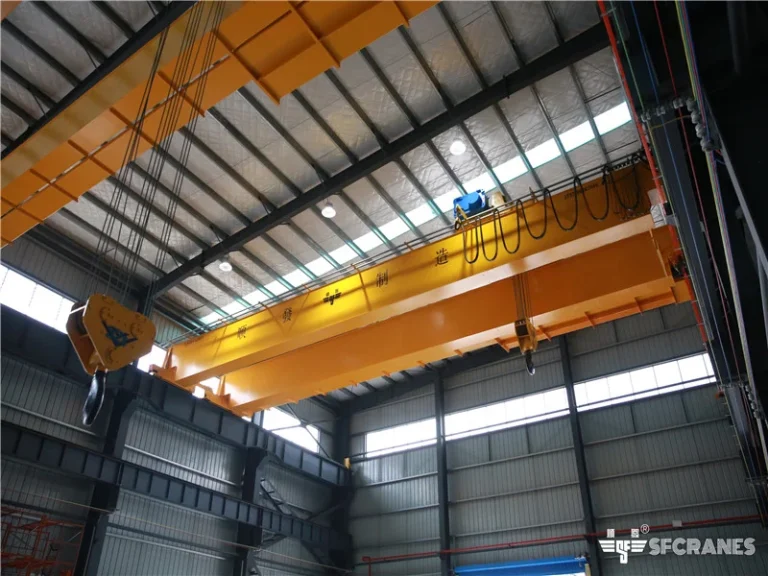
The upper limit switch is one of those crane components that gets attention only when something goes wrong. It sits quietly in the system, yet it protects the hoist from travelling too far upward and bringing the hook block into parts of the crane that were never meant to meet it.
In daily production, the temptation is understandable: a load needs just a little more height, the operator is focused on the work below, and the upper limit seems like a convenient end stop. It is not. An upper limit switch is a protective device, not a normal operating control.
Trade technicians regularly describe limit-switch issues alongside rope changes, brake faults and control problems because all of these systems meet at the hoist. When the hook block is allowed to run too high, the consequences can include damaged rope, sheaves, drum components, electrical parts and the hook block itself. A simple fault can quickly become an extended outage.
What does an upper limit switch do?
An upper limit switch changes the hoist control circuit when the hook block reaches its upper travel limit. Its purpose is to stop further upward motion before the block or related components make damaging contact.
For electric travelling cranes, OSHA requires an overtravel limit switch in the hoisting direction. OSHA also states that the upper limit switch should be tried under no load at the beginning of each operator’s shift, and that the switch controlling the upper travel of the load block must never be used as an operating control.
The exact design varies by hoist manufacturer. Some systems use a mechanical arrangement, others use a geared or rotating limit switch, and some include an additional upper protective device. Whatever the design, the operating principle is the same: it is the final layer of protection for hoist-up travel, not the target point for every lift.
Why the limit switch is not a stopping point
Using the upper limit as a routine stop can create several problems:
- It repeatedly loads a protective component that was not intended for normal cycle control.
- It can mask an insufficient lifting-height allowance in the layout or process.
- It creates uncertainty if the hoist’s normal stopping position gradually changes.
- It may leave too little margin for a loaded hook block, rigging or a taller-than-usual workpiece.
The right operating stop is established by the job, the load and the operator’s normal controls. The upper limit remains in reserve for protection.
Warning signs that deserve attention
A limit switch does not need to fail completely before it becomes a problem. Report the issue and keep the equipment out of service when site procedures require it if you notice:
- The hoist stops at a different height from one cycle to the next.
- The hook block can travel closer to the hoist than it previously could.
- The hoist continues upward after the expected limit point.
- The limit trips during ordinary work because the lift path no longer has enough headroom.
- There is visible rope bunching, unusual contact, or a change in the block’s normal travel path.
- A control fault, alarm or repeated nuisance trip appears after a maintenance task.
These symptoms are not invitations to adjust a switch from the floor or bypass it to keep production moving. They are reasons for designated maintenance personnel to inspect the system in accordance with the manufacturer’s instructions and the site’s safety process.
Why bypassing the switch is a serious mistake
Bypassing a protective device removes the final barrier between the hook block and an overtravel event. It also makes it harder to tell whether another issue is present: a changed rope reeving path, poor drum winding, an incorrect adjustment, a blocked travel path or an unplanned change to the work process.
The short-term gain is usually a few minutes. The possible cost is damaged lifting equipment, an uncontrolled load, a production shutdown or an injury. If a lift cannot be completed within the crane’s normal travel envelope, the lift needs to be redesigned or the equipment needs to be reviewed.
What crane owners should review
When an upper limit issue appears, the useful questions are broader than "Is the switch working?":
- Is the crane providing enough lift height for the current load, rigging and fixture?
- Has the workpiece, pallet, fixture or tooling changed since the crane was selected?
- Is the hook block approach suitable for the available headroom?
- Are rope condition, drum winding and sheave alignment being inspected as part of the maintenance program?
- Do operators know the normal stopping height for the task?
Sometimes the answer is a maintenance repair. Sometimes it is a low-headroom hoist arrangement, a different lifting fixture or a change to the process. Treating the switch as the problem without checking the whole lift path often leads to the same failure returning later.
SFCRANE’s overhead crane installation guide explains why lift height, runway conditions and electrical arrangements should be settled before commissioning. For other early warning signs around the hoisting system, see overhead hoist brake problems and warning signs. You can also review suitable overhead crane configurations for new or upgraded workshops.
FAQ
Is an upper limit switch required on an overhead hoist?
Requirements vary by jurisdiction and equipment type. In U.S. general industry, OSHA 1910.179 requires an overtravel limit switch in the hoisting direction for electric travelling cranes. Always follow the requirements that apply to the installation and the equipment manufacturer’s documentation.
Can the upper limit switch be used to stop a normal lift?
No. It is a protective device. The normal stopping point should be controlled through the operating procedure, with the upper limit left to protect against overtravel.
What should happen if the upper limit does not work correctly?
Notify the appointed or designated person immediately and follow the site’s procedure for removing equipment from service and arranging inspection or repair. Do not bypass the device.
Does a limit-switch issue always mean the hoist needs replacing?
No. The cause could be adjustment, wiring, a worn component, an operating issue or a headroom mismatch. A qualified inspection should identify the cause before a repair or replacement decision is made.