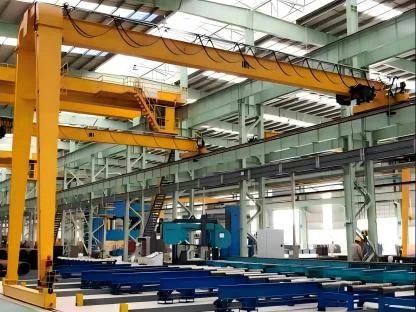
Single Girder Overhead Crane Project for a New Energy Workshop
In a new energy workshop, lifting work is usually mixed into normal production. Operators may need to move frames, tooling, fixtures, battery-related parts or packed material several times a shift. For this project, the practical choice was a single girder overhead crane because the load was regular, the span was manageable and the customer wanted a clear floor for production flow.

Project Background
The site did not need a complicated heavy-duty crane. It needed a bridge crane that could reach the working area cleanly, leave enough hook height, and keep the operating rhythm steady. This is the same basic logic we use for many manufacturing industry crane projects: start with the material route, then choose the crane.

What We Checked Before Selection
- Span, lifting height and hook approach at both ends of the runway.
- Column positions, machine locations and whether any equipment blocks the hook path.
- Power supply route, pendant control position and daily operator walking path.
- Maintenance access for the hoist, end carriage and electrical components.
A single girder crane often looks simple from the floor, but it still needs careful layout work. A few centimeters of hook approach can decide whether the crane can pick the part directly or whether workers still need a forklift for the last step.

Buyer Takeaway
If your workshop is still being planned, send the building drawing and process route through the contact page before the runway is fixed. It is much easier to adjust the crane span, rail position or control method before the steel structure and electrical route are already installed.

More finished lifting projects can be reviewed in the project gallery.