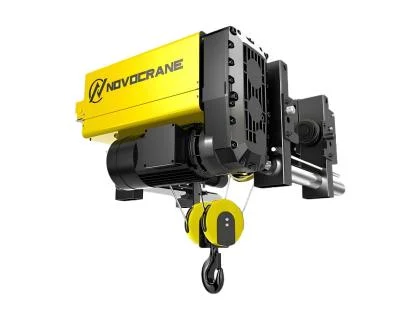
Can a 30 Ton Manual Chain Hoist Be Practical? Pull Force, Lift Travel, and When Electric Hoists Make More Sense
Short answer: A 30 ton manual chain hoist can be practical for an occasional, carefully planned lift with limited vertical travel. It becomes a poor production tool when the lift is high, repeated, time-sensitive, or requires close positioning. At that point, the question is no longer whether the hoist can carry the load. It is whether people can operate the whole lift safely and efficiently.
A recent discussion about a 30 ton manual chain hoist drew attention because the rating was enormous, yet the practical concern was obvious: moving that much load by hand is slow work. That is the right starting point for a buying decision. Rated capacity is essential, but it does not tell you how much hand-chain travel, operator effort, setup time, or control you will need on the job.
Capacity is only the first number
A chain hoist rating tells you the maximum load the equipment is designed to lift under its specified conditions. It does not mean every rated lift is equally sensible to perform manually.
As capacity increases, a manual hoist uses more load-chain falls and greater mechanical advantage. The operator pulls a lower force at the hand chain than they would without that advantage, but the tradeoff is distance: a long length of hand chain may have to pass through the hoist to move the hook a relatively short vertical distance. Exact values depend on the make, capacity, reeving and model. Always use the manufacturer’s data for hand-chain pull and hand-chain travel.
Five questions to ask before choosing a manual hoist
1. How far does the load actually need to travel?
A short lift to free a component, align a bearing housing, remove a gearbox, or hold a load during a repair is very different from raising a load through several meters of travel. Manual hoists are often excellent for the first type of work. Long vertical travel makes hand-chain time and fatigue a major part of the job.
2. How often will the lift be repeated?
One controlled lift during an outage can justify a manual chain hoist. Repeating the same lift every shift, every day, or across multiple workstations usually points toward a powered solution. Repetition is where productivity, ergonomics and consistent control matter most.
3. How precise does placement need to be?
Heavy loads rarely need only upward motion. They may need to be aligned with a machine, set into a fixture, lowered through an opening, or held while a crew makes an adjustment. Slow manual operation can provide fine control, but it also takes more time and can be difficult when several people are sharing a pull chain. A powered hoist with appropriate controls can make repeated positioning more predictable.
4. Is there a realistic operator plan?
Do not treat operator effort as an afterthought. The lift plan should state who operates the hoist, who guides the load, how communication works, and how the team will stop if the load does not behave as expected. Adding people to a pull chain does not remove the need for a defined plan; it creates more coordination to manage.
5. What supports the hoist?
The hoist is only one part of the lifting system. Check the beam, trolley, runway, suspension points, structure, clearances and load path. A high-capacity hoist can be safely rated, while the available supporting structure is not. The complete system needs to be reviewed before the lift, especially when the hoist is temporary or the load is near the maximum capacity.
When a manual chain hoist is still the right choice
A manual hoist is not obsolete. It remains a strong choice when the work is occasional, the load path is simple, power is unavailable or undesirable, the lift distance is short, and portability matters. It can also be useful as a controlled positioning tool during maintenance, provided the hoist, rigging and support structure are all correctly selected.
The right application is usually defined by low duty cycle, not simply by low capacity. A manual hoist may be appropriate for a substantial one-time load if the lift is planned, slow and infrequent. It is much less attractive when the same load must be moved repeatedly during normal production.
When an electric hoist makes more sense
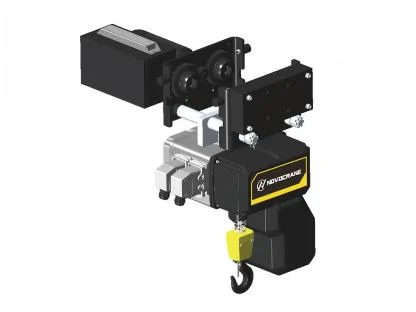
Move toward an electric hoist when longer lift travel, frequent cycles, repeatable positioning, or operator fatigue become part of the job. For workstation lifting, assembly work, machine loading, maintenance rooms, jib cranes and KBK systems, a compact electric chain hoist can reduce repetitive pulling and make handling more consistent.
That does not mean an electric chain hoist is automatically the answer for every 30 ton load. Capacity, duty classification, lift height, power supply, control method, trolley, structure and application environment still have to be matched. Larger or higher-duty work may require a different hoist type or a complete overhead crane system.

A practical decision rule
Choose a manual chain hoist when the lift is rare, short, controlled and portable. Start evaluating electric lifting when the job is repetitive, high-travel, operator-intensive, or tied to production flow. For a very large load, ask for the full calculation and product data rather than comparing ratings alone.
Before ordering, give the supplier the load weight, lift height, required headroom, duty cycle, operation frequency, power availability, working environment, supporting structure and required controls. Those details are more useful than a capacity number by itself.
FAQ
Can one person operate a 30 ton manual chain hoist?
That depends on the specific hoist’s rated hand-chain pull, the lift height and the work plan. Do not assume one person is suitable just because the hoist is rated for the load. Check the manufacturer data and plan the lift around the actual operating effort.
Does a higher rated manual hoist always need more hand-chain travel?
High-capacity manual hoists commonly use greater mechanical advantage, which can increase the amount of hand chain moved for each meter of hook travel. The exact ratio varies by model and reeving, so use the product manual rather than a general estimate.
Is a manual chain hoist safer than an electric hoist?
Neither type is automatically safer. Safety comes from correct selection, rated components, a sound support structure, inspection, trained operators and a lift plan that matches the work.
Can an electric chain hoist replace every manual hoist?
No. Manual hoists still have advantages in temporary, low-frequency and no-power situations. Electric hoists are generally better where travel and operating cycles make manual pulling inefficient.
What information should I send when requesting a hoist quotation?
Provide the maximum load, lift height, headroom, duty cycle, lifts per hour, speed requirement, power supply, mounting method, environment and any control or safety requirements. Also describe the supporting beam or crane system.
For compact powered lifting around workstations and light crane systems, see our electric chain hoist options.
Source context
This article was prompted by a high-engagement field discussion about a 30 ton manual chain hoist. The article does not treat the discussion as engineering data; final selection must follow the specific manufacturer’s documentation and the complete lift-system design.