
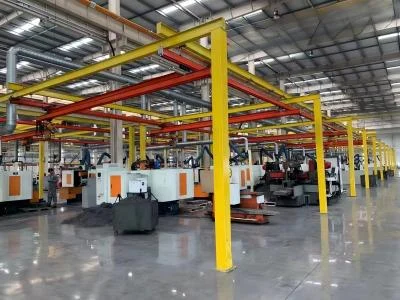
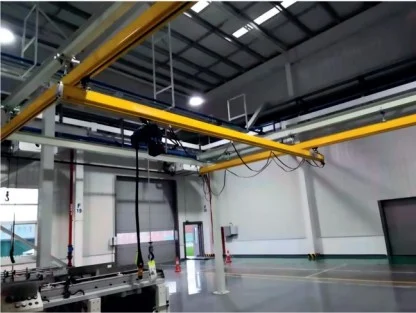
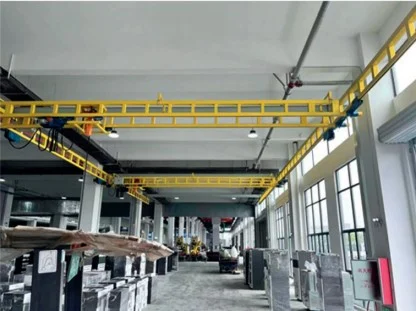
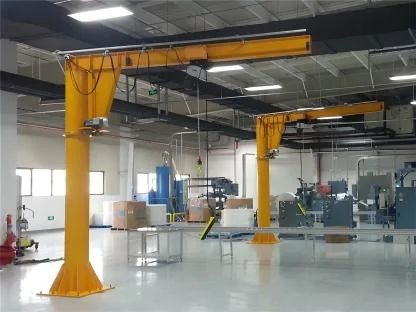
Light crane systems are built for the lifting jobs that happen all day at one workstation: loading a CNC machine, moving fixtures, supporting assembly or lifting a part from a trolley to a bench. SUNFACRANE designs modular KBK rail cranes, workstation bridge cranes, jib cranes and electric chain hoist systems around your real working area, not just a catalogue capacity.
A good light crane removes awkward manual handling without forcing the factory to build a heavy runway. We look at hook path, operator movement, support points and daily cycle count before choosing the rail type.
Start with the part weight and the area the hook needs to cover. From there, the right system may be a suspended KBK crane, a freestanding workstation bridge crane, a jib crane or a simple chain hoist package.
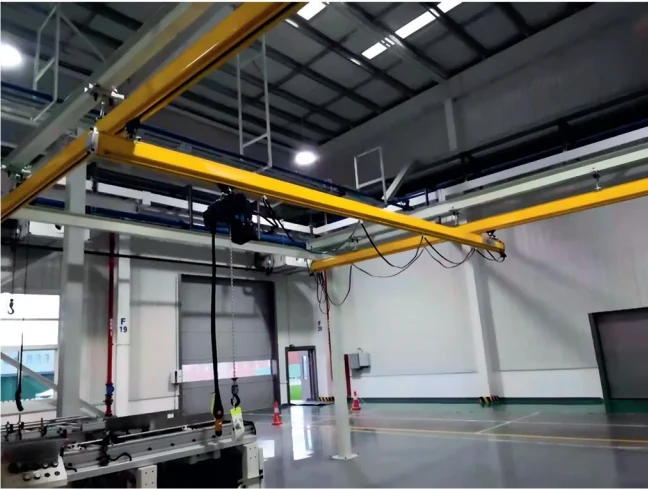
A modular enclosed-track system with smooth movement and clean coverage above assembly benches, welding cells and machine loading areas.
Best for: operators who need light, repeatable lifting across a defined workstation.
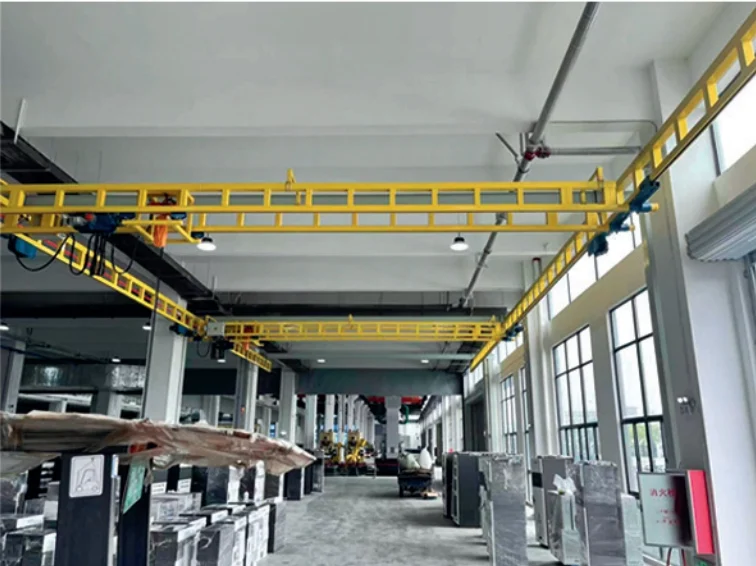
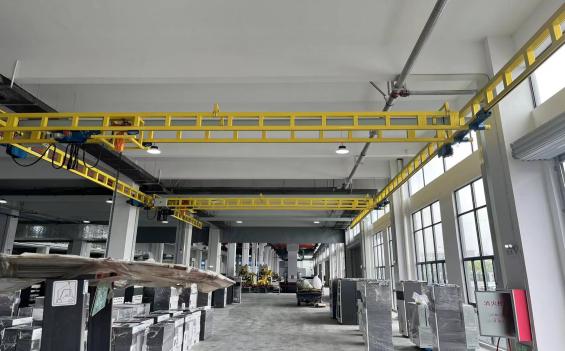
A stronger rail option for longer routes, higher use frequency and production lines that need dependable overhead movement every shift.
Best for: assembly lines, warehouse stations and multi-bay handling routes.
A compact crane for one machine, one column area or one maintenance corner where the hook needs to swing into position quickly.
Best for: CNC loading, pump maintenance, tooling areas and repair stations.
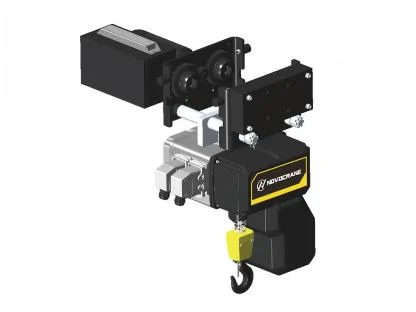
A practical lifting unit for KBK rails, jib cranes and light bridge cranes when precise vertical movement matters more than heavy-duty trolley travel.
Best for: 125 kg to 2 ton workstation lifting with pendant or wireless control.
The best system usually comes from a few practical numbers: the heaviest part, how often it is lifted, the workstation size, the building support conditions and how the operator needs to move while handling the load.
Tell us the normal load, maximum load and how many lifts happen per hour. This decides the rail, hoist and travel method.
A light crane should cover the real work path, not just the middle of a bay. Rail length, bridge span and obstruction points matter.
The system can be ceiling-mounted, column-supported or freestanding. We check roof load limits and floor conditions before recommending a layout.
Manual push is often enough for lighter loads. Electric travel or wireless control makes sense when the operator handles heavier parts repeatedly.
These figures are a starting point. Final rail size, support spacing and hoist configuration are confirmed after checking your building layout and daily working rhythm.
| Item | Common Options | What to Confirm |
|---|---|---|
| Capacity | 125 kg, 250 kg, 500 kg, 1 ton and up to 2 ton for many workstation systems. | Normal load, maximum load and any unusual lifting fixtures. |
| Structure | Ceiling-mounted KBK, freestanding workstation bridge crane, wall jib or column jib. | Roof structure, floor thickness, column positions and available headroom. |
| Coverage | Custom rail length, bridge span and hook path based on the working cell. | Machine position, bench layout, travel route and safety clearance. |
| Hoist | Electric chain hoist, low headroom trolley and manual or electric travel. | Lifting height, lifting speed, duty cycle and control preference. |
| Safety | End stops, buffers, overload protection, emergency stop and anti-drop support details. | Site rules, operator access and any local inspection requirements. |
Light crane systems are not only for small loads. They are for repetitive work where the operator needs control, reach and a safer way to move parts without waiting for a large workshop crane.
Move parts from carts to benches, from benches to fixtures and between short production steps.
Load CNC machines, injection molding machines, lathes or machining centers with less manual handling.
Lift pumps, motors, rollers and spare parts in a dedicated repair bay.
Handle cartons, tooling, molds or components where forklifts are too slow or too large.
You do not need a perfect drawing before contacting us. A simple sketch, a few photos and the part weight range are usually enough to start a practical layout discussion.
Send the load range, lifting height, work area size and photos of the workstation.
We review rail direction, support points, hook coverage and operator movement.
Rail type, hoist, trolley, controls and safety accessories are selected around the duty.
You receive a layout-based quotation with the main technical assumptions clearly listed.
If your load, span or working frequency moves beyond a light crane, these related pages help compare the next practical crane type.
For heavier workshop coverage, bridge crane layouts and EOT crane projects.
For yards, flexible indoor bays and areas where runway beams are not practical.
For lighter overhead layouts where the crane can be suspended from the building structure.
See how different crane systems fit manufacturing, warehouses, steel work and maintenance.
Tell us what the operator needs to lift and where the hook needs to reach. We will suggest a workable light crane layout instead of sending a generic catalogue answer.
Response is usually faster when the project details include the working area and part weight.
Common questions about workstation and light-duty crane systems.
A light crane system is used for localized lifting in workstations, assembly lines, maintenance points and machine loading areas where smooth operation matters.
KBK rail cranes suit modular work areas, jib cranes suit local swing coverage, aluminum track cranes reduce dead weight and mobile gantry cranes give flexible movement.
Many modular rail systems can be expanded or adjusted when production lines change, depending on the support structure and layout.
Load weight, work area, lifting height, travel route, mounting condition and hoist type are needed.