

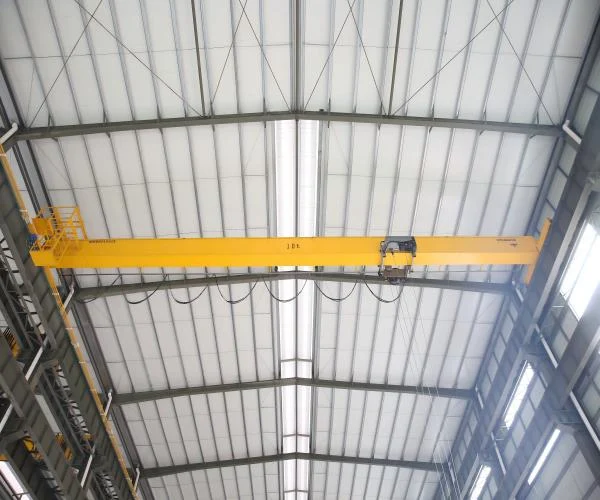


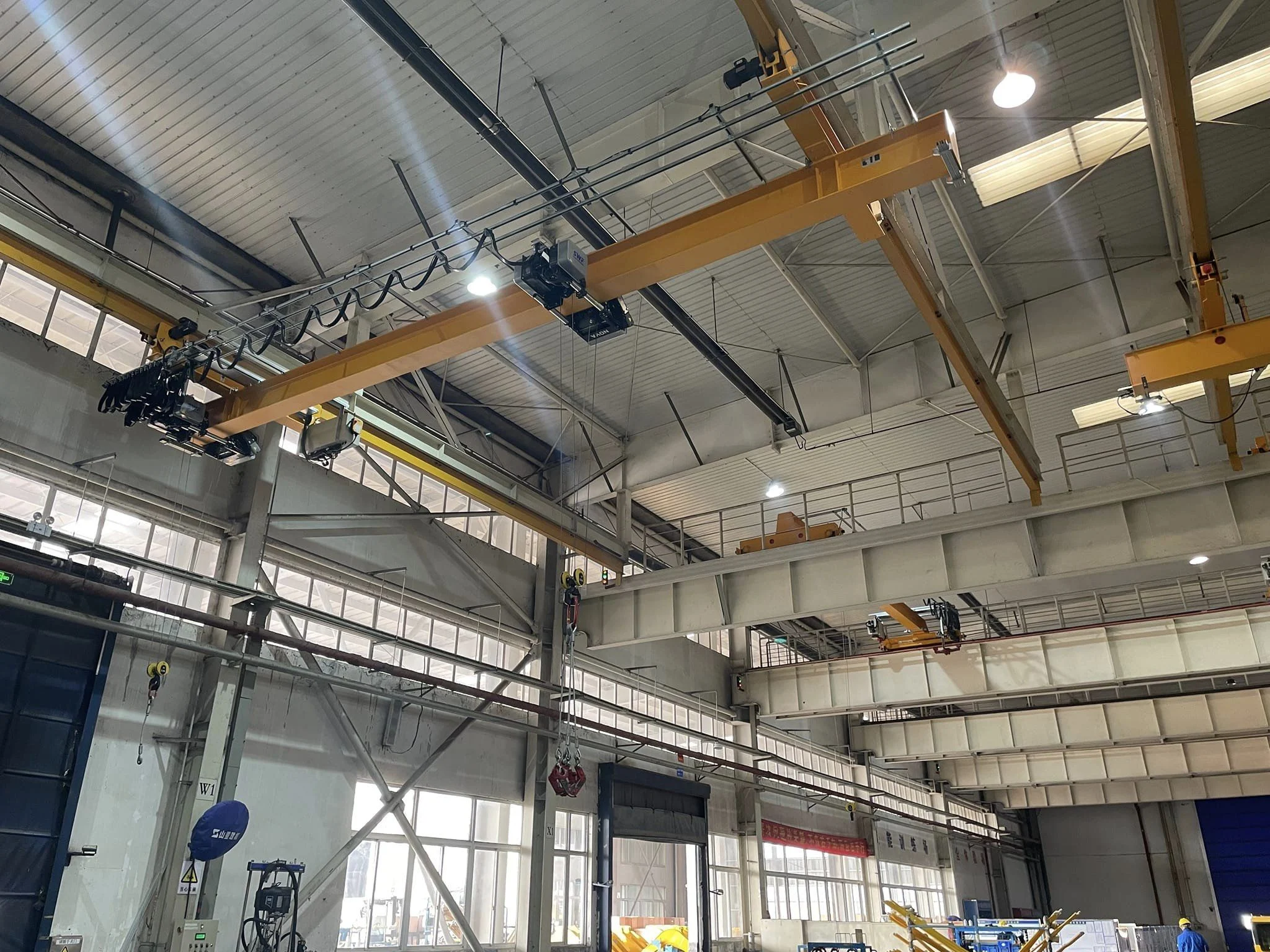
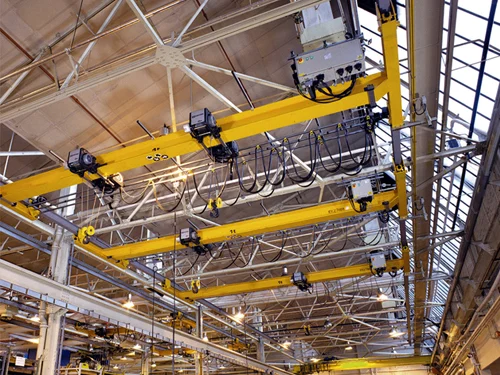
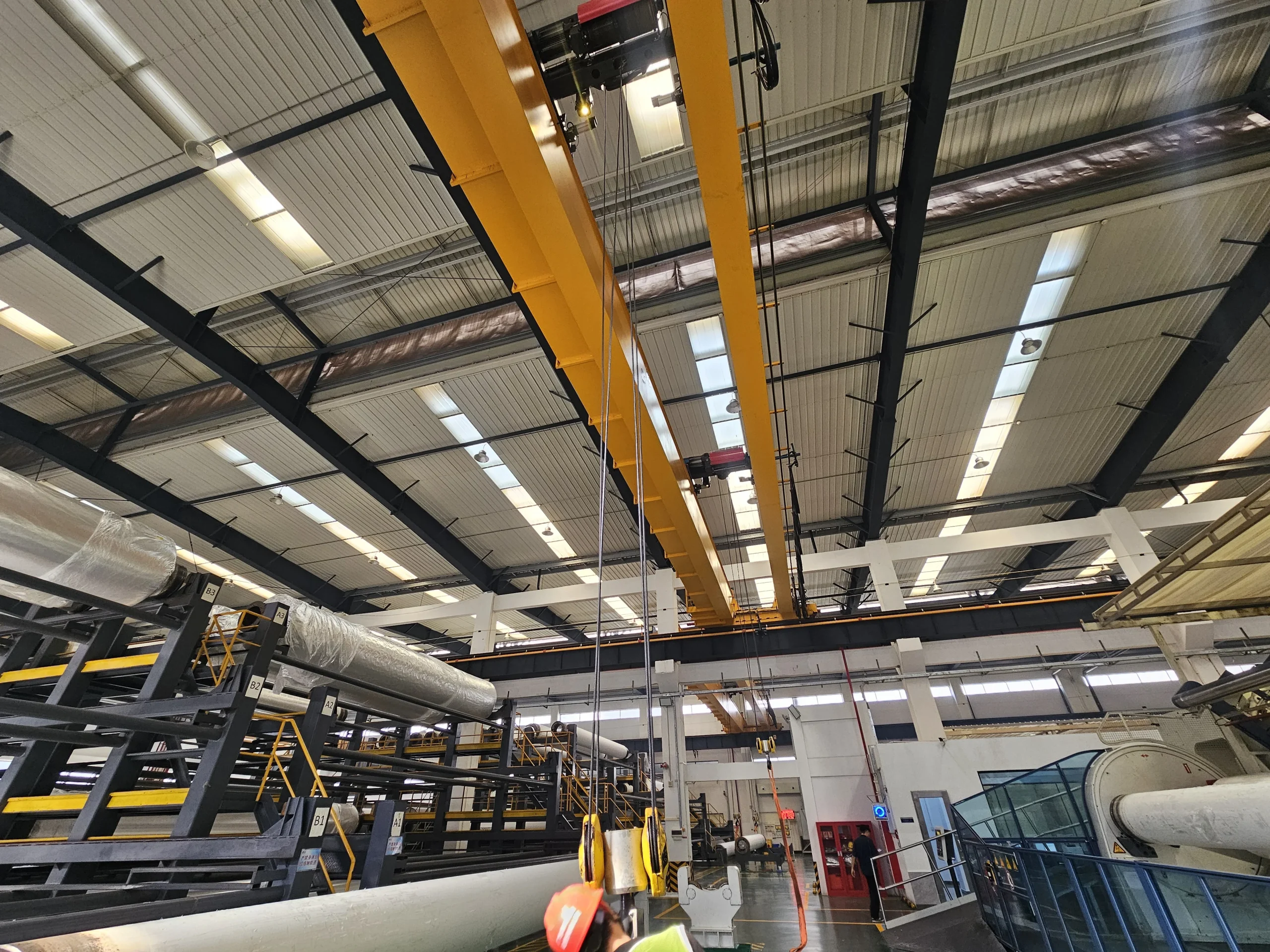
Custom bridge crane systems for production workshops, warehouses, steel plants and heavy manufacturing. SUNFACRANE designs single girder, double girder, suspension and winch type overhead cranes around your span, duty class and building layout.
We help buyers move from basic lifting requirements to a workable crane layout: runway loads, hook coverage, duty class, controls, installation constraints and export packaging are considered before the quotation.
Each crane type solves a different lifting problem. Start from load, span, headroom and working frequency, then narrow the choice with the cards below.
A professional overhead crane proposal should not feel like a catalog guess. The right design balances lifting capacity, runway load, hook approach, control method, duty class and future maintenance space. See our assembly-bay crane capacity project for a practical example using 5t, 16/3t, 20/5t, 25/5t and 32/5t cranes in one multi-bay plant.
Start with rated load, span, lifting height and hook approach. These numbers decide the crane type, girder size and runway load.
Check columns, roof beams, runway rails and available headroom before choosing top running or underhung designs.
Daily cycles, load spectrum and working environment determine duty class, motor selection, braking and electrical protection.
Choose pendant, wireless remote or cabin operation with limit switches, overload protection and anti-collision options as needed.
Use this as a starting point for discussion. A final quotation should always be checked against your workshop drawings and actual lifting process.
Move steel parts, molds, fixtures and machinery across repeated production work cells.
| Item | Common options | Engineering note |
|---|---|---|
| Capacity | 1 to 500 tons | Final capacity depends on crane type, span, duty class and runway structure. |
| Span | 7.5 m to 35 m typical | Longer spans need stronger girder design and careful wheel load checking. |
| Lifting height | Customized to workshop | Low headroom hoists or suspension cranes can improve available hook height. |
| Duty class | A3 to A8 / FEM options | Higher cycle work needs stronger motors, brakes, controls and electrical protection. |
| Hoist system | Electric hoist, open winch trolley | Choose by capacity, lifting height, service intensity and maintenance access. |
| Control method | Pendant, wireless remote, cabin, PLC | Remote control is common for production lines and safer operator visibility. |
| Power supply | 380V, 415V, 440V or customized | Voltage, phase and site standards are confirmed before manufacturing. |
Overhead cranes are usually chosen when the full floor area must stay open while heavy loads move repeatedly through a fixed bay.
Move steel parts, molds, fixtures and machinery across repeated production work cells.
Support coils, plates, billets, welded structures and heavy fabrication with higher duty cranes.
Improve indoor material handling where forklifts cannot safely cover the full working area.
Lift engines, pumps, dies, tools and machine components with controlled positioning.
For overseas projects, clear early data saves time. Share the workshop size, crane travel length, runway beam condition and lifting process, and we can narrow the design quickly.
Capacity, span, runway beam, working area, power supply and building drawings are checked first.
We prepare a practical configuration with crane type, hoist, speed, safety options and quotation notes.
Main beams, end carriages, hoists and electrical systems are produced and inspected before shipment.
Export packing, installation guidance, spare parts and technical support help keep the project moving.
Compare gantry crane options for yards, precast areas and facilities without runway beams.
KBK flexible rail cranes work well for assembly lines and frequent light handling around workstations.
Basic questions to confirm before selecting a bridge crane.
An overhead crane moves heavy loads across a workshop, warehouse or production bay using a bridge, runway and hoist system.
Single girder cranes suit many medium-duty applications. Double girder cranes support heavier loads, longer spans and higher lifting heights.
Yes, if the runway and building structure can support the crane loads. A structural review is needed.
Capacity, span, lifting height, runway length, duty cycle, control method and workshop drawing are needed.
Tell us the load, span, lifting height and working area. If you have drawings, photos or a runway beam sketch, mention them in the message and our engineering team can reply with a more useful proposal.
Reply in 24h for basic project information.